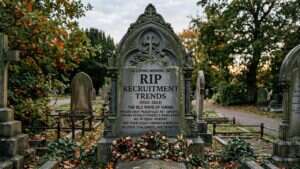


Every three years, New Zealand collectively decides to put its career on hold.
Not officially, of course. Nobody sends a memo. But somewhere around mid-year, a strange paralysis creeps into the market. Candidates who were “definitely open to a chat” in March suddenly want to “see how things land.” Hiring managers who had sign-off for three roles now have sign-off for zero, pending “clarity.”
Clarity on what, exactly? Nobody’s entirely sure. But it feels prudent, and prudent is the national love language.
Here’s the thing though: the election isn’t freezing the market. We are.
Let’s start with candidates. The logic goes something like this: “I don’t want to change jobs before the election, because what if the new government changes things?” Which things? Unclear. In most private sector roles, the difference between one coalition arrangement and another will affect your day-to-day work about as much as the weather in Invercargill. Your commute, your manager, your salary, none of those are on the ballot.
But last-in-first-out anxiety is real, and I get it. Nobody wants to be the newest hire if restructures follow the results. So people stay put in roles they’ve mentally left, waiting for a signal that never actually arrives. Because here’s the secret: there is no “all clear” moment after an election. There’s just December, then the summer shutdown, then “let’s pick this up in the new year,” and suddenly you’ve spent eighteen months in a job you were done with in June.
Now, businesses. Some of the caution is genuinely rational. If you’re in Wellington and your revenue has a government logo on it, election year is not a hypothetical for you, it’s a line item. Public sector hiring genuinely does slow down, budgets genuinely do get parked, and consultancies genuinely do hold their breath. Fair enough.
But I’ve watched private sector businesses with zero government exposure freeze hiring “because of the election,” as if the outcome will somehow determine whether they still need an accounts person.
Just a little note: they will still need an accounts person. They needed one in July. They’ll be desperate for one in February, along with everyone else who waited, all fishing in the same post-election talent pool at the same time.
The wait-and-see approach doesn’t remove risk, it just moves it. You’re trading a calm mid-year market, where good candidates are available and less contested, for a frantic Q1 scramble where every business that hit pause is now hitting play simultaneously. Same hire, worse odds, higher salary.
So here’s my slightly contrarian take: election year is a hiring opportunity dressed up as a hiring risk.
While your competitors are waiting for clarity, the market is quieter. Fewer roles being advertised means your role stands out. Candidates who are open right now, in the middle of the collective pause, tend to be genuinely motivated, they’re not window shopping, they’re moving with intent. And you get them settled, onboarded, and productive before the January rush even wakes up.
The businesses that hire well through uncertainty aren’t reckless. They’ve just worked out that “we’ll wait until after the election” is rarely a strategy.
Mostly, it’s a mood.
The election is on 7 November. Your vacancy doesn’t know that.
Are you seeing the slowdown in your patch or quietly taking advantage of it? 🧡
First published in Sarah’s LinkedIn newsletter, Recruitment Rambles. Read the original edition on LinkedIn.