

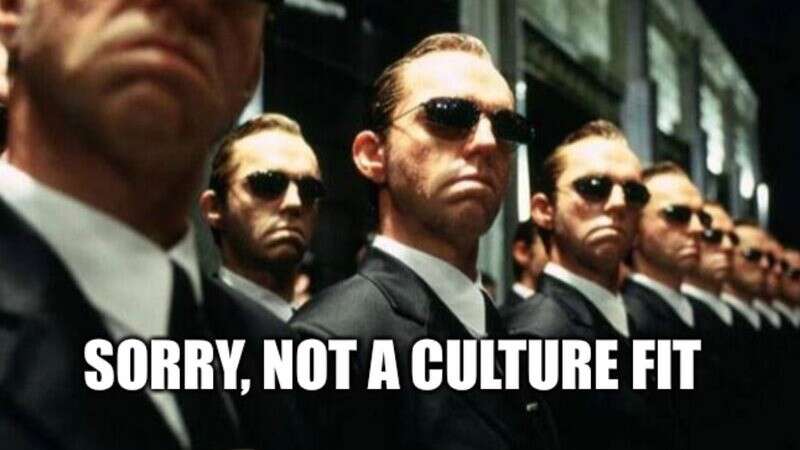
And one of the most misunderstood.
When it’s used well, it’s genuinely important.
Culture fit should mean: will this person thrive in the way we work? Do they share our values? Will they add something to the team – energy, perspective, approach – that makes the whole thing better?
That’s a legitimate thing to hire for.
But sometimes — and I say this carefully — “culture fit” is just a polite way of saying “someone who feels familiar.”
Someone who went to the same kind of school. Has the same communication style. Laughs at the same things. Reminds the hiring manager a little bit of themselves.
That’s not culture fit.
That’s comfort. And there’s a difference.
What hiring for comfort actually costs you
You end up with a team that thinks the same way. Challenges the same things. Has the same blind spots.
Meanwhile the candidate who would have pushed you forward, asked better questions, and brought a completely different perspective? Didn’t “feel right” in the interview.
So they went somewhere else. And that somewhere else got better because of it.
I’m not saying every business does this intentionally. Most of the time it’s unconscious. A gut feeling that’s hard to articulate. An interview panel that all nod at the same time.
But if you want to hire for real culture fit – here’s what that actually looks like in practice:
01 Define your values before you hire – not during
If you can’t clearly articulate what your culture actually is, you can’t hire for it. “Good vibes” is not a value. Get specific.
02 Ask values-based questions – and actually listen to the answers
“Tell me about a time you disagreed with a decision at work – what did you do?” reveals far more than “are you a team player?”
03 Separate “culture fit” from “culture add”
The best hires don’t just fit your culture – they stretch it a little. Ask yourself: what does this person bring that we don’t already have?
04 Watch who’s doing the deciding
If every hiring decision goes through one person’s gut feeling, you’re not hiring for culture – you’re hiring for that one person’s comfort. Diverse panels make better calls.
Culture fit matters. Genuinely.
But it should be a thoughtful decision – not a feeling you can’t explain, dressed up in language that sounds more considered than it is.
The best teams I’ve seen built? They had a strong shared culture – and wildly different people within it.
First published in Sarah’s LinkedIn newsletter, Recruitment Rambles. Read the original edition on LinkedIn.