
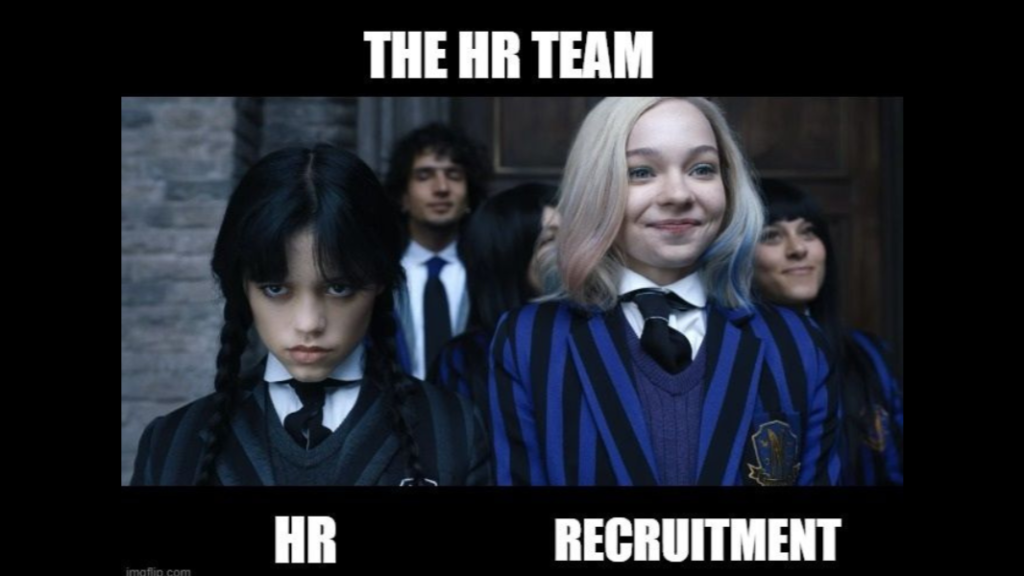
And confusing the two is costing businesses good hires.
I say this with respect for both.
But the number of times I’ve spoken to a business that thinks HR handles hiring… and then wonders why their hiring is slow, reactive, and painful.
It’s worth unpacking
HR is fundamentally about protecting the business
Employment law. Compliance. Performance management. Policies. Payroll. Onboarding frameworks. Culture documentation.
It’s critical work and it’s largely inward-facing.
Recruitment is about finding the right person – fast
Market knowledge. Active talent pipelines. Knowing who’s looking, who isn’t, and who you should be talking to anyway.
It’s outward-facing. And it moves fast – or it should.
Asking your HR team to also run recruitment is like asking your accountant to also run your sales team.
Different skills. Different focus. Different outcomes.
And yet it happens constantly – especially in small to mid-size businesses where one person is expected to do both.
The result? A role sitting open for 3 months. A process that feels admin-heavy and candidate-unfriendly. Good people are dropping out because the experience was slow.
I’ve seen it enough times to stop being surprised by it.
Here’s what I know to be true:
01 The best candidates are off the market in under two weeks. If your process takes longer than that, you’re already losing.
02 HR is often stretched across 10 other priorities. Recruitment needs to be someone’s main focus — not a task squeezed in between compliance reviews.
03 Candidate experience is employer brand. The way someone is treated during a hiring process – whether they get the job or not – travels. Especially in NZ.
This isn’t a dig at HR professionals – genuinely.
It’s a call out to the businesses who are setting both functions up to fail by blurring the lines.
Get clear on what you actually need – and then resource it properly.
First published in Sarah’s LinkedIn newsletter, Recruitment Rambles. Read the original edition on LinkedIn.